
WHY YOU HAVE TO LOOSEN A ROUTER BIT TWICE
Ever wondered why your router collet seems to loosen twice before the bit comes free? This article explains the clever engineering behind self-releasing collets, revealing how the two-step loosening process actually helps eject the bit safely and prevents the frustrating sticking problems common in older router designs.
If you've ever changed a router bit and wondered why the collet nut seems to loosen twice, you're not alone.
In fact, it's one of those little mysteries that frustrates a lot of woodworkers until they understand what's actually happening. And once you do understand it, it's pretty interesting engineering.
Today, let's take a closer look at the self-releasing router collet, why it behaves the way it does, and why that seemingly annoying two-step loosening process is actually a feature—not a defect.
The Mystery of the Tight-Loose-Tight-Loose Collet
You've probably experienced this before.
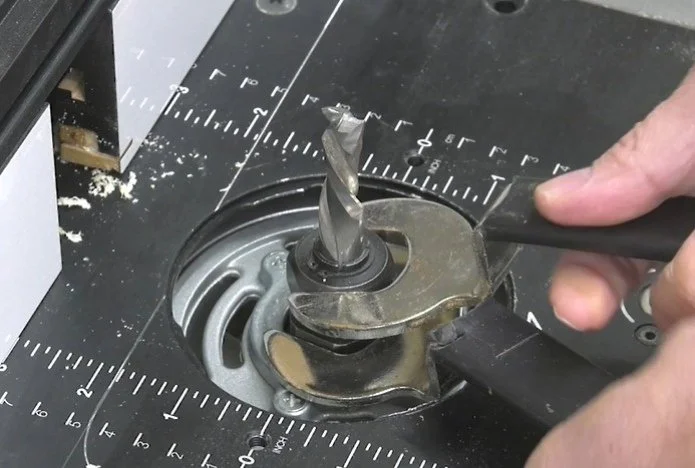
You put a wrench on the router collet nut and break it free. Then you start spinning the nut off with your fingers.
Everything seems normal for a turn or two.
Then suddenly the nut gets tight again.
You grab the wrench a second time, break it loose again, and only then does the router bit come free.
The first time this happens, many woodworkers assume something is wrong:
Is the collet damaged?
Are the threads dirty?
Is the bit stuck?
Usually, the answer is no.
What you're experiencing is the normal operation of a self-releasing collet.
What Is a Self-Releasing Collet?
Self-releasing collets are common on Porter-Cable or other similar routers. And they look something like this:
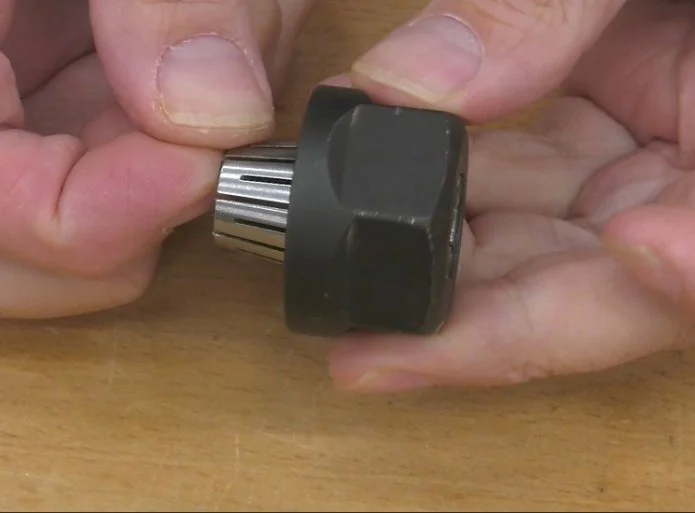
A self-releasing collet consists of two parts:
The collet nut
The collet sleeve
Although they are technically separate components, they lock together and function as a single assembly during normal use.
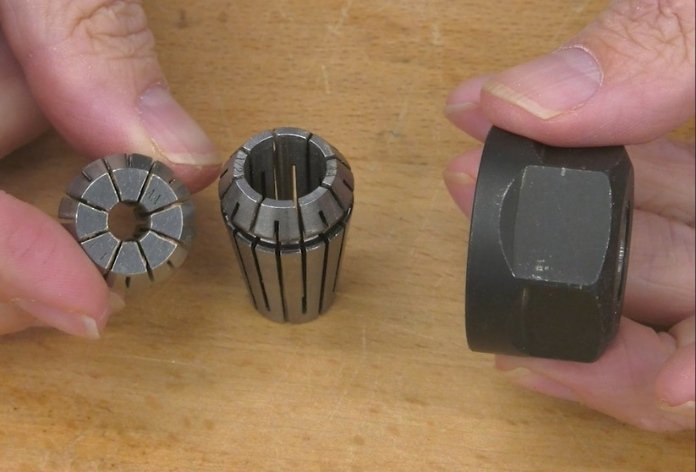
You can remove and change the collet if needed, for instance from 1/2” to 1/4”, the collet remains captured inside the nut.
How the Collet Holds a Router Bit
To understand the release process, it helps to understand how the collet grips the bit in the first place.
The collet fits into a tapered hole at the end of the router's motor shaft.
The collet itself has:
A matching tapered exterior
Several slits cut into its sides
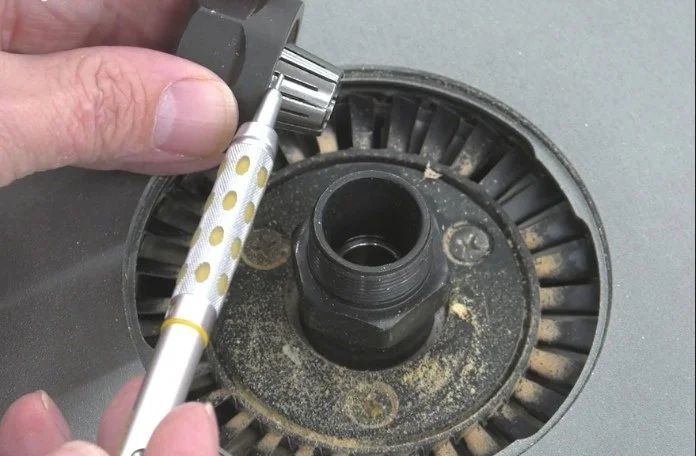
Those slits allow the collet to compress.
As the collet nut is tightened, it pulls the collet deeper into the tapered opening. The taper squeezes the slotted collet inward, clamping tightly around the shank of the router bit.
The harder the collet is pulled into the taper, the tighter it grips the bit.
It's a simple and extremely effective design.
The Hidden Movement Inside the Collet Nut
Here's where things get interesting.
If you examine a self-releasing collet closely, you'll notice that the collet can move slightly up and down within the nut.
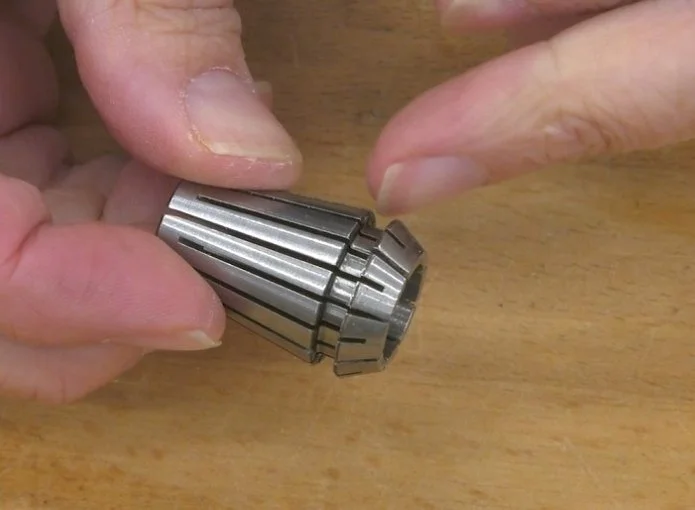
That movement exists because the retaining ring inside the nut engages a slot in the collet. The slot is intentionally wider than the retaining ring.
In other words, there is a small amount of built-in play between the two components.
That little bit of movement is necessary so the nut can rotate freely around the collet.
And it's also responsible for the two-step loosening process.
Why the Nut Gets Tight a Second Time
When you first loosen the collet nut, you're only breaking the threads free from the router shaft.
As you begin turning the nut by hand, the nut moves through the built-in slack between the retaining ring and the collet groove.
During this stage:
The nut is turning freely.
The collet itself hasn't moved yet.
The bit is still firmly clamped.
Once that slack is taken up, the retaining ring inside the nut finally contacts the upper edge of the collet groove.
Now the nut begins pulling the collet upward.
But the collet is still wedged tightly in the tapered opening.
That's why the nut suddenly feels tight again.
What you're actually feeling is the force required to pull the collet out of the taper.
A second turn with the wrench breaks that friction hold, allowing the collet to release its grip on the bit.
Once the collet pops free, the bit is released and the nut spins off easily again.
Why It's Called a Self-Releasing Collet
At this point you might be thinking:
"If I have to use the wrench twice, why is it called self-releasing?"
Good question.
The answer becomes clear when you compare it to older collet designs.
Traditional Collets Can Get Stuck
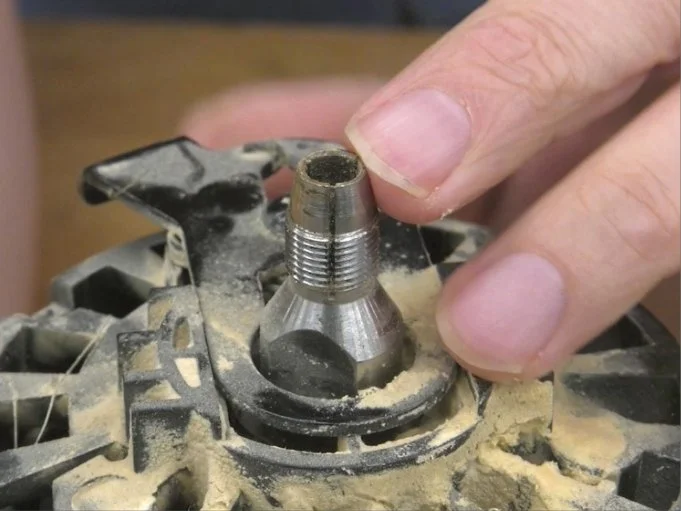
Some routers use a different arrangement where the collet is integrated directly into the motor shaft.
In these designs, loosening the nut simply removes the squeezing force.
Ideally, the slotted collet springs back open and releases the bit.
But sometimes it doesn't.
The collet can remain stuck tightly around the bit shank even after the nut is loose.
If you've ever owned one of these routers, you've probably seen people resort to tapping the shaft with a wrench or using other less-than-elegant methods to free a stubborn bit.
How Self-Releasing Collets Solve the Problem
A self-releasing collet works differently.
Instead of relying on the collet to spring open on its own, the nut physically pulls the collet out of the tapered opening as you loosen it.
That mechanical action forces the collet to release its grip.
In other words, the router itself helps eject the bit.
That's where the term self-releasing comes from.
Can they still stick occasionally?
Sure.
Nothing is perfect.
It is still generally much easier than dealing with a seized traditional collet.
The Next Time It Happens...
The next time you're changing a router bit and the collet goes:
Loose → Tight → Loose
you'll know exactly what's happening.
Nothing is broken.
Nothing is binding.
It's one of those small details that seems strange until you understand the mechanics behind it—and then it makes perfect sense.
And that's often the case with woodworking machinery. What looks like a problem at first glance is sometimes just clever engineering doing exactly what it was designed to do.
Happy woodworking!
This post may contain affiliate links. If you make a purchase, we may receive a small commission.
Need some cool tools for your shop? Browse my Amazon Storefront for inspiration.
